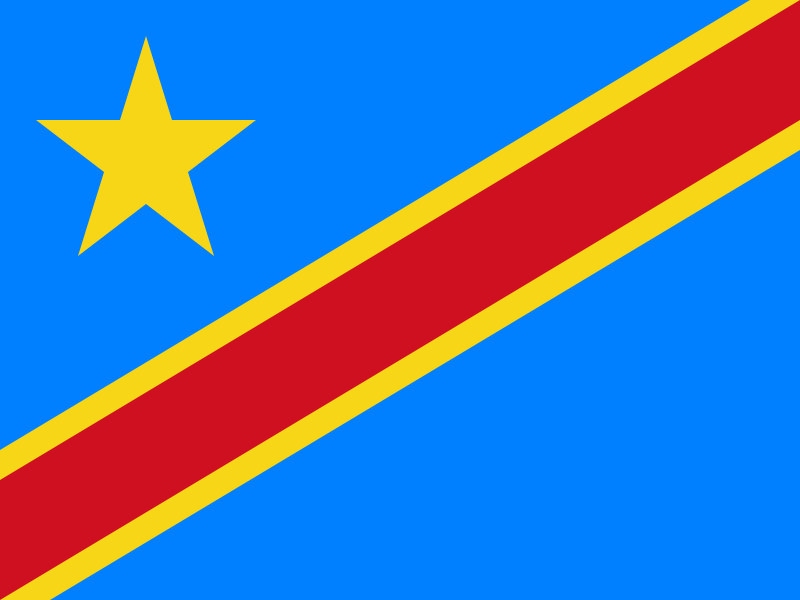
DR Congo
Back after 52 years, already shocking
Last played in 1974 (as Zaire) — and as 200-1 outsiders they drew World No. 5 Portugal.
Watchability4/5
Drama5/5
Star power2/5
Title shot1/5
Team rating
72TEAM
- Attack73
- Midfield71
- Defense71
Next matches
- Next upvs ColombiaEstadio Akron, ZapopanJun 23
- vs UzbekistanMercedes-Benz Stadium, AtlantaJun 27
The read
DR Congo — nicknamed the Leopards — hadn't reached a World Cup since 1974, when the country was called Zaire, a 52-year wait. Written off as 200-to-1 outsiders, they came from behind to draw 1-1 with Portugal in their opener, with Yoane Wissa heading home the nation's first World Cup goal in half a century. Suddenly a team nobody expected to matter is provisionally top of a group containing a tournament favorite.
The fan’s readThe Leopards back after 52 years, arriving as 200-1 outsiders and DRAWING World No. 5 Portugal, heading home their first World Cup goal in half a century. A nation that never stopped believing it belonged.
The cast
- Sébastien DesabreFrench coach and African-football veteran who has managed clubs and nations across the continentmanager
- Yoane Wissa ★His header made an entire country erupt — DR Congo's first World Cup goal in 52 years.ClubNewcastle United
- Chancel MbembaThe iron captain with 100+ caps who dragged this team back to the World Cup.ClubLille
- Cedric BakambuOne goal short of DR Congo's all-time scoring record at 35, on likely his last World Cup.Clubunverified (2025-26 club not confirmed)
- Gael KakutaOnce Chelsea's most-hyped teenager, now home at 34 for likely his only World Cup.ClubAEL Larissa

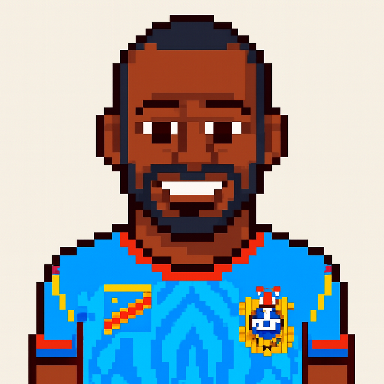
Key moments
- 19741974 — the Zaire farceAt their only previous World Cup, playing as Zaire, the team lost 9-0 to Yugoslavia and a player famously ran out and kicked away an opponent's free kick before it was taken — later explained as a protest under a threatening dictator. It became a symbol of how the world underestimated African football.
- 1974Two-time African championsThe nation won the Africa Cup of Nations twice — in 1968 and again in 1974 (as Congo-Kinshasa, then Zaire) — proving the football pedigree was always there, even across decades of World Cup absence.